
If you are a commercial driver, knowing the difference between a DOT physical and a regular physical is important for your health and career. At Rapid City Health Care, we provide reliable DOT Physicals in Irving, TX, helping drivers stay safe and compliant with federal regulations.
While both exams involve checking your health, each serves a different purpose. A DOT physical ensures you are fit to operate commercial vehicles, while a regular physical focuses on overall health and disease prevention. Understanding these differences can help you take the right steps to protect yourself, your passengers, and everyone on the road.
What is a DOT Physical?
A DOT physical is a medical exam required by the U.S. Department of Transportation (DOT) for commercial drivers. This physical is specifically designed to ensure that drivers are physically and mentally fit to operate commercial vehicles safely.
The DOT physical is mandatory for drivers who operate:
- Commercial trucks
- Buses
- Hazardous materials vehicles
- Other large vehicles that require a commercial driver’s license (CDL)
Failing to pass a DOT physical can prevent a driver from legally operating a commercial vehicle, which makes this exam very important.
What Does a DOT Physical Include?
A DOT physical is more specialized than a regular physical. It focuses on the key areas that affect a driver’s ability to operate a commercial vehicle safely. Here’s what typically happens during a DOT physical:
- Medical History Review – The examiner will ask about your medical history, including chronic conditions, surgeries, medications, and any history of heart, lung, or neurological problems.
- Vision and Hearing Test – You must meet minimum vision and hearing standards to ensure you can safely operate a vehicle.
- Blood Pressure and Heart Check – High blood pressure and heart problems can affect driving safety. The examiner will check for these conditions.
- Urine Test – This helps detect certain medical conditions and drug use.
- Physical Examination – The examiner will check your general physical health, including the lungs, heart, abdomen, and extremities.
- Review of Mental Health – Mental fitness is also assessed to ensure you can safely handle the responsibilities of a commercial driver.
A DOT-certified medical examiner must conduct this exam. Passing the exam allows you to receive a DOT medical card, which is valid for up to two years, depending on your health.
What is a Regular Physical?
A regular physical, also known as an annual wellness exam, is a general health check-up for anyone. It is not specific to driving or commercial vehicle operation. A regular physical focuses on overall health and disease prevention.
Regular physicals are important for detecting early signs of health problems, staying up-to-date on vaccinations, and receiving advice on diet, exercise, and lifestyle.
What Does a Regular Physical Include?
The content of a regular physical can vary depending on your age, gender, and personal health history. Common elements include:
- Medical History Review – Your doctor will ask about your personal and family health history, medications, and lifestyle.
- Physical Exam – This includes checking your heart, lungs, abdomen, skin, and extremities.
- Vital Signs – Blood pressure, heart rate, temperature, and weight are measured.
- Lab Tests – Blood and urine tests may be ordered to check cholesterol, blood sugar, kidney function, and other health markers.
- Preventive Screenings – These may include cancer screenings, bone density checks, or heart health assessments, depending on age and risk factors.
- Vaccinations – Your doctor may recommend vaccines such as flu shots, COVID-19 boosters, or other preventive vaccines.
Unlike DOT physicals, regular physicals are not tied to federal regulations and do not grant special certifications.
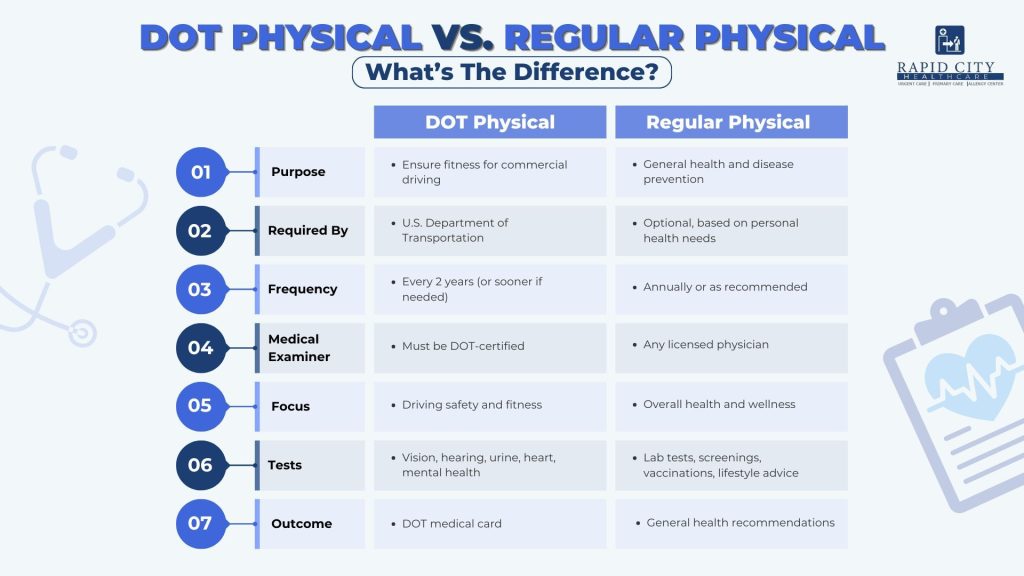
Key Differences Between DOT Physical and Regular Physical
While both exams check your overall health, there are several key differences:
| Feature | DOT Physical | Regular Physical |
| Purpose | Ensure fitness for commercial driving | General health and disease prevention |
| Required By | U.S. Department of Transportation | Optional, based on personal health needs |
| Frequency | Every 2 years (or sooner if needed) | Annually or as recommended by your doctor |
| Medical Examiner | Must be DOT-certified | Can be any licensed physician |
| Focus | Driving safety and fitness | Overall health and wellness |
| Tests | Vision, hearing, urine, heart, mental health | Lab tests, screenings, vaccinations, lifestyle advice |
| Outcome | DOT medical card | General health recommendations |
Why DOT Physicals Are Important
DOT physicals are essential for drivers who operate commercial vehicles. They:
- Ensure safety on the road – Drivers must be healthy enough to operate large vehicles.
- Prevent accidents – Undiagnosed medical conditions can cause accidents.
- Comply with federal regulations – A valid DOT medical card is required by law to operate commercial vehicles.
- Protect your career – Failing to maintain a valid DOT physical can result in suspension of your CDL.
Why Regular Physicals Are Important
Regular physicals are important for everyone, not just drivers. They:
- Detect health issues early – Many conditions can be treated more effectively if caught early.
- Promote healthy lifestyle choices – Your doctor can guide diet, exercise, and habits.
- Maintain long-term health – Regular monitoring helps you avoid serious illnesses.
- Provide personalized care – Screenings and recommendations are tailored to your health needs.
Can DOT Physicals Replace Regular Physicals?
While DOT physicals are thorough in certain areas, they do not replace regular physicals. DOT exams focus on fitness for driving, but they may not include important preventive screenings, vaccinations, or lifestyle counseling that a regular physical provides.
For example, a DOT physical may check blood pressure, but it may not include a cholesterol test or cancer screening unless needed. Therefore, it’s a good idea for commercial drivers to have both a DOT physical and a regular physical to maintain overall health.
Tips for Preparing for a DOT Physical
To ensure you pass your DOT physical and stay healthy:
- Bring your medical records – This includes medications, previous surgeries, or chronic conditions.
- Know your medications – Have a list of all prescription and over-the-counter drugs.
- Get enough rest – Being well-rested helps with accurate blood pressure and heart readings.
- Avoid tobacco or alcohol before the exam – These can affect test results.
- Wear comfortable clothing – Makes the physical examination easier.
Rapid City Health Care – DOT Physicals in Irving, TX
At Rapid City Health Care in Irving, TX, we make DOT physicals simple and stress-free. Our DOT-certified medical examiners are experienced in providing thorough exams and issuing DOT medical cards efficiently.
We also encourage drivers to schedule regular physicals to maintain overall health. Our friendly staff will guide you through the process, answer your questions, and ensure your visit is smooth and quick.
Final Thoughts
Understanding the difference between a DOT physical and a regular physical is essential for commercial drivers and anyone focused on their health.
- DOT physicals ensure you are safe and compliant for commercial driving.
- Regular physicals keep you healthy and help detect health issues early.
For commercial drivers in Irving, TX, scheduling your DOT physical at Rapid City Health Care is an important step to protect your career and your health. Remember, maintaining both your driving fitness and overall health is key to a long, safe, and healthy life on the road.
Schedule your DOT physical today and stay safe behind the wheel.
Frequently Asked Questions
1. What is a DOT physical?
A DOT physical is a medical exam required by the U.S. Department of Transportation for commercial drivers to ensure they are physically and mentally fit to operate commercial vehicles safely.
2. Who needs a DOT physical?
Drivers operating commercial trucks, buses, hazardous materials vehicles, or any large vehicle requiring a commercial driver’s license (CDL) need a DOT physical.
3. How is a DOT physical different from a regular physical?
A DOT physical focuses on driving safety and compliance with federal regulations, including vision, hearing, and mental health checks. A regular physical focuses on overall health, disease prevention, and wellness.
4. How often do I need a DOT physical?
Most DOT physicals are valid for up to two years, but your medical examiner may recommend a shorter period depending on your health.
5. Can a DOT physical replace a regular physical?
No. DOT physicals check fitness for driving, but may not include preventive screenings or vaccinations. Regular physicals are still important for overall health.
6. Where can I get DOT Physicals in Irving, TX?
You can get DOT physicals at Rapid City Health Care in Irving, TX, performed by certified DOT medical examiners.